Contact
How the Children’s Classics Can Change Your Life: The Little House Books, The Swiss Family Robinson & Anne of Green Gables
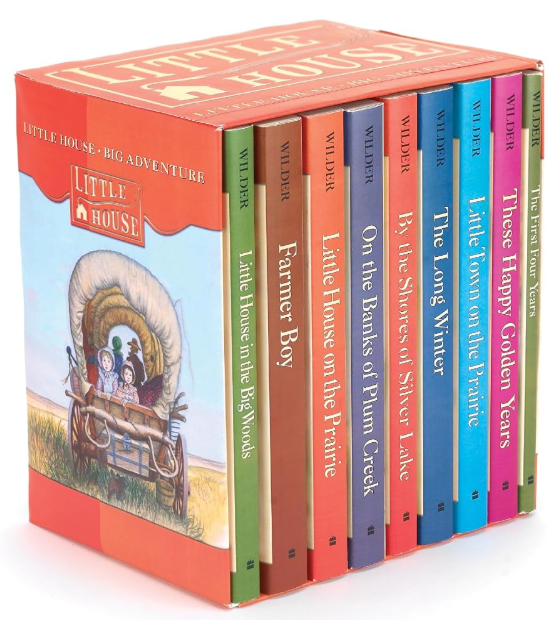
The classic American Little House books by Laura Ingalls Wilder not only portray a long-gone pioneer way of life, but also the basic rhythms of a Christian society abandoned even by most modern churchgoers. Growing up, Sunday was the Sabbath. There was church, religious reading, and family time—no shopping, going out to dinner, or other extracurriculars. As stores began to open up for Sunday shopping in the ‘80s, my grandfather tried to shop only at places that remained closed on Sundays and shuttered his own bakery for the day. The experience of attempting to keep the Lord’s Day holy, as Christians have done for more than a thousand years, was familiar to Wilder but foreign to our present culture:
On Sundays Mary and Laura must not run or shout or be noisy in their play. Mary could not sew on her nine-patch quilt, and Laura could not knit on the tiny mittens she was making for Baby Carrie. They might look quietly at their paper dolls, but they must not make anything new for them. They were not allowed to sew on doll clothes, not even with pins.
They must sit quietly and listen while Ma read Bible stories to them, or stories about lions and tigers and white bears from Pa’s big green book, The Wonders of the Animal World. They might look at pictures, and they might hold their rag dolls nicely and talk to them. But there was nothing else they could do.
This Sunday experience would resonate with nearly all previous generations—only in the last half-century has it almost entirely disappeared. What must post-modern readers think of these antiquated traditions that lasted far longer than the pioneer days—but vanished nonetheless?
The Sabbath also plays a key role in my favourite childhood classic, Johann Wyss’s 1812 The Swiss Family Robinson. Wyss, the rector of the Reformed Protestant Cathedral in Bern, wanted to write a story that would teach his children valuable lessons. The Robinsons—a pastor, his wife, and their four sons—are shipwrecked on an uninhabited island teeming with strange and rare creatures, and their adventures as they establish a colony completely captured my childhood imagination. After some time on the island, Father tells his family that they must keep the Sabbath day holy—and because they have lost all track of time, they choose a day for rest, a sermon, Scripture reading, prayer, and family time. Despite the hard work of survival, devotion to God is portrayed as central and as essential as growing crops. Souls and soil must both be tended.
Another example is Anne of Green Gables by Lucy Maud Montgomery. Montgomery grew up in a Presbyterian household, married a Presbyterian pastor, and with her husband, served the St. Paul’s Presbyterian Church in Leaksdale, Ontario while writing books on the parlor couch in the house just down the road (you can still visit, and it is well worth doing so.) Christian values are not the central story of Anne and Green Gables, but again, they are such an inextricable part of the culture that they constantly break through right from the beginning:
“You’ll have to remember a little better if you stay here,” admonished Marilla. “There, that looks something like. Say your prayers now and get into bed.”
“I never say any prayers,” announced Anne.
Marilla looked horrified astonishment.
“Why, Anne, what do you mean? Were you never taught to say your prayers? God always wants little girls to say their prayers. Don’t you know who God is, Anne?”
“God is a spirit, infinite, eternal and unchangeable, in His being, wisdom, power, holiness, justice, goodness, and truth,'” responded Anne promptly and glibly.
Marilla looked rather relieved.
“So you do know something then, thank goodness! You’re not quite a heathen. Where did you learn that?”
“Oh, at the asylum Sunday-school. They made us learn the whole catechism. I liked it pretty well. There’s something splendid about some of the words. `Infinite, eternal and unchangeable.’ Isn’t that grand? It has such a roll to it–just like a big organ playing. You couldn’t quite call it poetry, I suppose, but it sounds a lot like it, doesn’t it?”
To be continued . . .