Contact
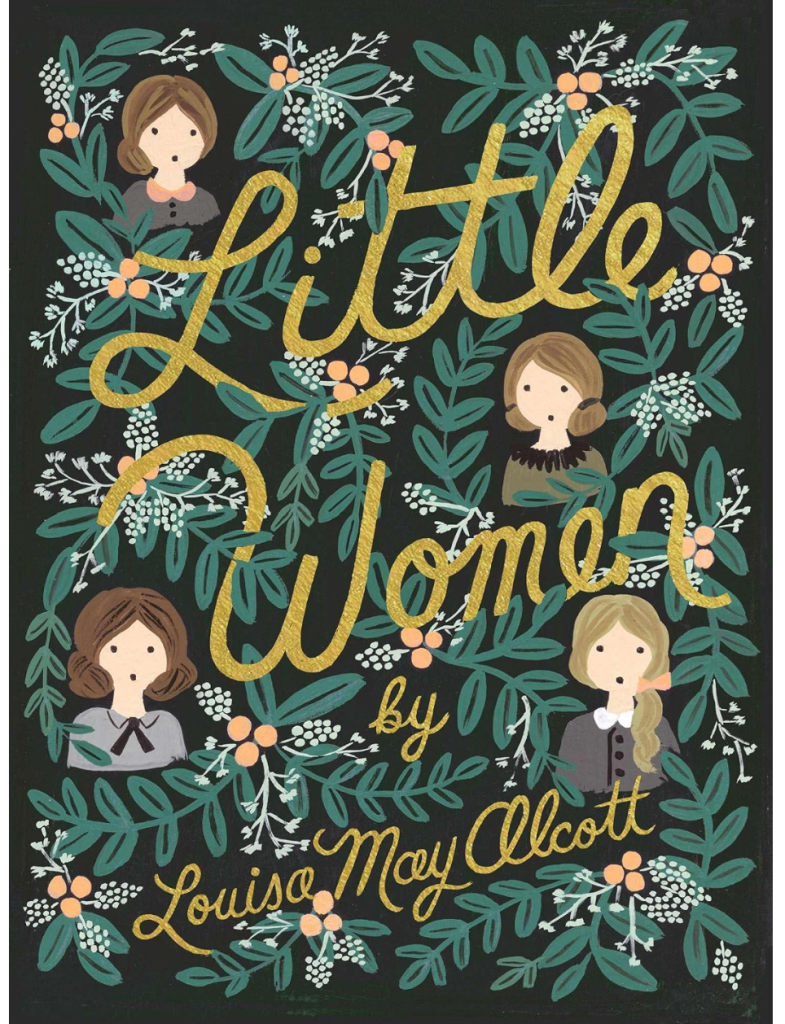
It is particularly jarring to read Louisa May Alcott’s novels in the Instagram age, where appearance is everything, makeup tutorials rack up millions of hits, and image and reality are locked in a depressing dance that wreaks havoc on the mental health of numberless young girls. The virtues of modesty and humility have not been abandoned so much as forgotten entirely. Consider Chapter 9 of Little Women, titled “Meg Goes To Vanity Fair,” a reference to John Bunyan’s Pilgrim’s Progress, in the context of our digital world. It describes Meg’s falling in with a gaggle of girls who determine to make Meg a “fine lady”:
They crimped and curled her hair, they polished her neck and arms with some fragrant powder, touched her lips with coralline salve to make them redder, and Hortense would have added ‘a soupcon of rouge’, if Meg had not rebelled. They laced her into a sky–blue dress, which was so tight she could hardly breathe and so low in the neck that modest Meg blushed at herself in the mirror. A set of silver filagree was added, bracelets, necklace, brooch, and even earrings, for Hortense tied them on with a bit of pink silk which did not show. A cluster of tea–rose buds at the bosom, and a ruche, reconciled Meg to the display of her pretty, white shoulders, and a pair of high–heeled silk boots satisfied the last wish of her heart. A lace handkerchief, a plumy fan, and a bouquet in a shoulder holder finished her off, and Miss Belle surveyed her with the satisfaction of a little girl with a newly dressed doll.
Meg finds it difficult to enjoy her evening, is rebuked by family friend Laurie, and ends up confessing her vanity to her mother and sisters, wracked by guilt. It is a profoundly counter-cultural story—can you imagine attempting to explain to the youth of today how previous generations understood vanity and modesty? Exhibitionism, often online and to countless strangers, is now the norm for young people (and adults, as well.) To try and imagine what Heidi or Anne or the March girls would do with smartphones and Snapchat is to completely obliterate their stories and reshape their lives around these devices. The lives they lived would be nearly impossible with smartphones.
The stories Alcott tells are not just from another time and place, but in our era feel as if they are about a foreign people who saw life and the world around them in ways that made them radically different from us. As Mrs. March told her daughters: “Watch and pray, dear, never get tired of trying, and never think it is impossible to conquer your fault.” But what Mrs. March saw as faults are now just an average day on the Internet—even for those who profess to share her values. What would Mrs. March, or Marilla, or Ma Ingalls think of incessant selfies and constant scrolling? What would those who thought time was inestimably precious think of numberless hours poured into screens far into the night, and the filth too often pouring back?
But the point of this is not just to bemoan the ways our lives have changed in this post-Christian culture, or even the ways our technology has primed and conditioned us to unwittingly imbibe the values of that culture. There are good things about this moment, too—and one of them is that an enormous number of priceless classics containing the goodness, truth, and beauty of times past can be obtained cheaply at any bookstore. These stories and the lives they portray are not inaccessible to us. Pick up Heidi, or The Swiss Family Robinson, or Little Women–and I could have listed dozens of others, too. It is all still there, waiting to be rediscovered.
The End.